Livestream is changing how you show up, connect, and lead in a digital-first world.
As expectations rise, viewers look for more than just a live feed.
Learn about livestreaming, how the way your broadcast is produced affects how long people stay, how seriously they take your message, and whether they see your brand as professional and trustworthy.

What Is a Livestream?
A livestream is a real-time video broadcast over the internet.
When you livestream, your camera and microphone capture video and audio. That signal is sent to an encoder (hardware or software), which compresses the data so it can travel online. The encoded stream is then delivered to a streaming platform (like YouTube, Facebook, or a private server), and viewers can watch it almost instantly.
Unlike pre-recorded videos, a livestream happens as events unfold. You speak, move, or present, and your audience sees and hears it within seconds. There is usually a short delay (a few seconds) because the system needs time to process and transmit the data.
During a livestream, you can:
- Interact with viewers through live chat
- Answer questions in real time
- Run live product demos, webinars, interviews, or events
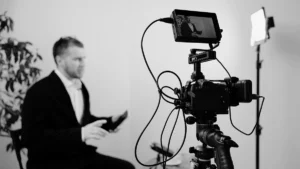
Technically, a successful livestream depends on four core elements:
- Video source (camera)
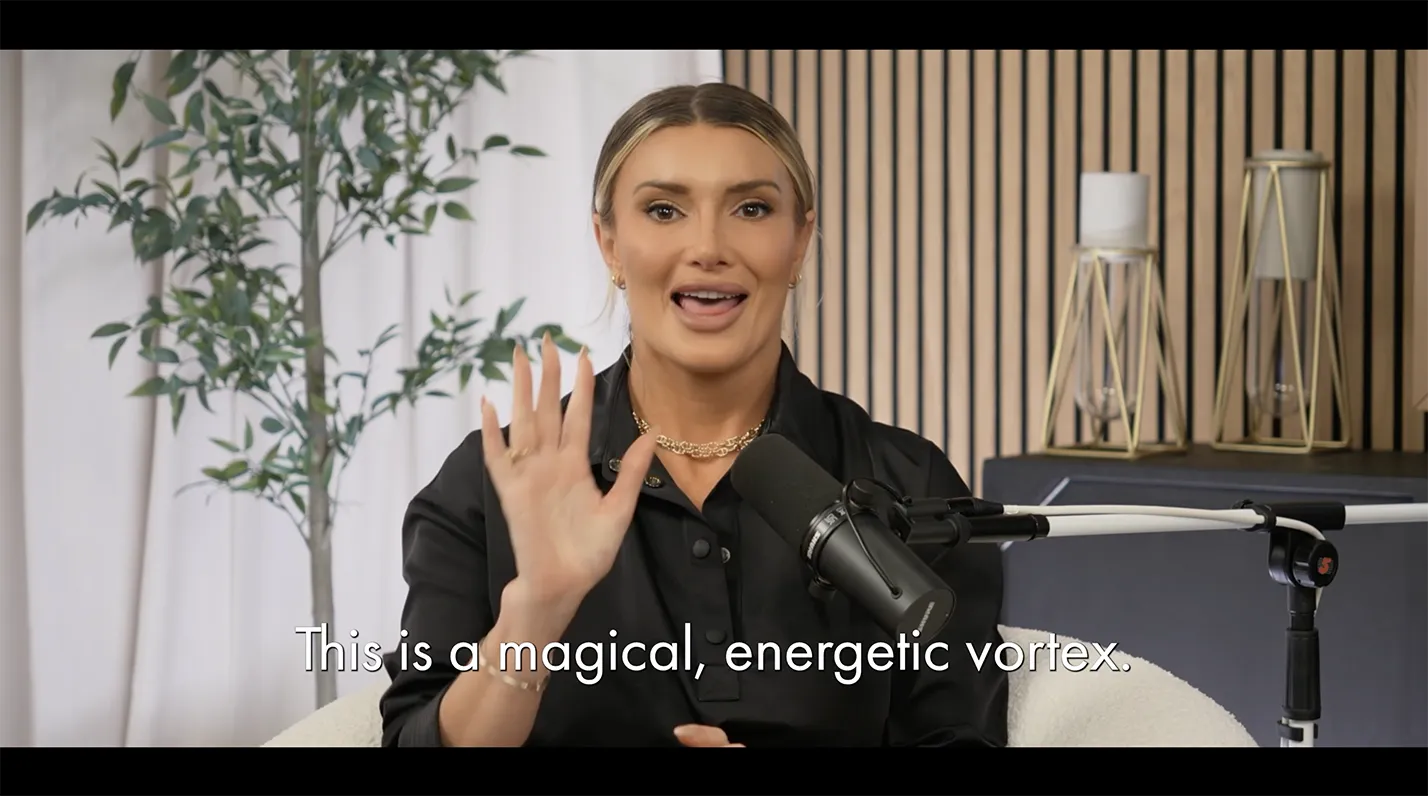
- Audio source (microphone)
- Encoder (converts raw video/audio into streamable data)
- Stable internet connection (uploads the stream without interruption)
If any of these fail, your audience will see buffering, hear distorted sound, or lose the stream completely.
Why Livestreaming Strengthens Audience Engagement and Brand Authority
Livestreaming strengthens audience engagement because it lets you interact with people in the moment, and that changes how they feel and behave.
You get more engagement because it’s two-way
When you go live, viewers can comment, ask questions, and react instantly. That real-time back-and-forth increases what researchers call interactivity and social presence (it feels more like you’re “there” with them). Studies link higher social presence and interaction in live streams to stronger participation, emotional response, and supportive behaviors from viewers.1
You build brand authority because live proves you know your stuff
Live is harder to fake, even at this age of AI (artificial intelligence). When you explain clearly, answer questions on the spot, and respond to concerns in real time, people can judge your competence and reliability right away. Research on live streaming commerce reveals that interactivity and expertise contribute to building trust, which in turn drives deeper engagement behaviors.2
You keep attention longer when the experience feels “real” and smooth
Viewers stay when the stream feels immersive and easy to follow. Research on livestream engagement shows that viewer actions (comments, follows, other engagement signals) are tied to outcomes like purchase intention and customer acquisition, meaning engagement isn’t just “nice,” it changes results.3
Production quality supports authority because it affects credibility
Even if your content is good, messy audio, bad lighting, and shaky video can make you seem less credible. An experiment in the Journalism & Mass Communication Quarterly found that higher production value made identical video stories appear more credible than those with low production value. That credibility effect is a big part of “brand authority.” 4
So, when you livestream, you’re not just talking at people, you’re talking with them. However, even if it’s real-time, you still need good production quality to make viewers see you as a legit voice worth following.
Why Production Quality Directly Impacts Viewer Retention
When someone clicks on your video or livestream, they decide within seconds if it’s worth their time. If your video looks dark or blurry, or your audio sounds echoey or distorted, viewers feel friction. That small discomfort makes them leave faster.
You lose viewers when the audio is unclear
Sound matters more than most people think. If your voice is hard to understand, has background noise, or keeps changing volume, your audience has to work harder to follow you. When people have to “work” to listen, they stop watching.
Clear audio:
- Reduces mental effort
- Keeps attention steady
- Makes your message easier to understand
If viewers strain to hear you, retention drops.
You lose attention when visuals are distracting
Bad lighting creates shadows. Poor framing makes you look awkward on screen. Low resolution makes your video feel outdated. Even if your content is strong, distracting visuals pull attention away from your message.
Good lighting and sharp video:
- Keep the focus on you
- Make facial expressions easier to read
- Help viewers stay visually engaged
When visuals feel clean and stable, people stay longer.
You lose trust when your stream buffers or lags
If your internet connection is unstable, viewers see freezing, pixelation, or sudden drops. Each interruption breaks concentration. Once attention breaks, many viewers don’t come back.
A stable stream:
- Prevents buffering
- Keeps audio and video synced
- Maintains flow and momentum
Consistency keeps people watching.
You increase watch time when everything feels smooth
Viewer retention depends on flow. When audio is clear, lighting is balanced, framing is intentional, and your stream runs smoothly, your audience can focus fully on your message.
- They don’t think about the tech.
- They stay inside the content.
But to consistently deliver that seamless experience, you need the right technical components of a high-quality livestream.
The Technical Components of a Successful Livestream
If you want your livestream to look professional and run smoothly, you need these four core technical parts working together. If one fails, your stream suffers.
1. Audio: Clear, Controlled Sound
Your audience will forgive an average video. They will not forgive bad sound.
You need a quality microphone that captures your voice clearly and reduces background noise. This can be a lavalier mic, shotgun mic, or broadcast mic, depending on your setup.
You also need:
- Proper mic placement (close enough, not too far)
- Consistent audio levels (not too loud or too soft)
- Minimal echo or room noise
If your audio clips, distorts, or sound hollow, viewers leave. Clear sound keeps them listening.
2. Video: Sharp and Stable Image
Your camera turns light into a digital signal. The better the sensor and lens, the clearer your image.
For professional results, you need:
- A high-resolution camera (at least 1080p)
- Proper framing (headroom, eye-level positioning)
- Stable mounting (tripod or fixed rig)
Shaky video, poor focus, or awkward framing distracts viewers. Sharp and steady visuals keep attention on you.
3. Lighting: Balanced and Intentional
Cameras need light to produce a clean image. Without proper lighting, your video looks dark, flat, or grainy.
Good lighting should:
- Illuminate your face evenly
- Reduce harsh shadows
- Separate you from the background
A basic setup often includes a key light (main light), fill light (softens shadows), and background light. Balanced lighting makes you look clear, confident, and professional.
4. Stable Streaming Infrastructure: Reliable Delivery
Even if your audio and video are excellent, your stream will fail without a strong technical backbone.
You need:
- A reliable encoder (hardware or software)
- Sufficient upload speed (stable, not just fast)
- A wired internet connection, when possible
- Platform compatibility and correct bitrate settings
All of these technical elements can be handled for you without the stress of setting up, testing, troubleshooting, and monitoring everything yourself when you use a professional studio built specifically for livestream production.
Why Work With Focal Studios
When you work with Focal Studios, you step into a fully built livestream environment designed to make you look and sound professional. Your audio is clear. Your lighting is balanced. Your video is sharp. The technical team handles setup, monitoring, and streaming stability, so you can focus on delivering your message with confidence. Instead of worrying about cables, cameras, or internet drops, you stay present and on-brand.
The studio also offers flexible options, whether you need a one-time General Admission booking or ongoing content support. You can book a single session, choose monthly memberships, or select recording packages based on your brand’s goals and production needs.
| If you’re ready to level up your livestream quality, schedule a studio tour and request a custom quote, let Focal Studios create a setup that works as hard as you do. |
Sources:
- Li, W., Cujilema, S., Hu, L., & Xie, G. (2025). How Social Scene Characteristics Affect Customers’ Purchase Intention: The Role of Trust and Privacy Concerns in Live Streaming Commerce. Journal of Theoretical and Applied Electronic Commerce Research, 20(2), 85. https://doi.org/10.3390/jtaer20020085
- Adi Prasetyo Tedjakusuma, Andri Dayarana K. Silalahi, Ixora Javanisa Eunike, Thanh, T., & Dalianus Riantama. (2025). The trust-driven path to consumer engagement behaviors: Exploring the role of streamer and platform characteristics in live-streaming E-commerce. Digital Business, 5(1), 100115–100115. https://doi.org/10.1016/j.digbus.2025.100115
- Zheng, R., Li, Z., & Na, S. (2022). How Customer Engagement in the live-streaming Affects Purchase Intention and Customer acquisition, E-tailer’s Perspective. Journal of Retailing and Consumer Services, 68, 103015. https://doi.org/10.1016/j.jretconser.2022.103015
- Cummins, R. G., & Chambers, T. (2011). How Production Value Impacts Perceived Technical Quality, Credibility, and Economic Value of Video News. Journalism & Mass Communication Quarterly, 88(4), 737–752. https://doi.org/10.1177/107769901108800404